Source Walkie Talkie Earpiece for Security, Police, and Construction
Explore 30 walkie talkie earpiece options featuring wired communication, noise-cancelling functions, and various earpiece styles. Buyers can compare specifications like cable materials, jack types, and warranty periods from suppliers in China.
Key considerations
Products List






Comprehensive Sourcing Guide
Strategic Sourcing Guide for Walkie Talkie Earpieces
The procurement of walkie talkie earpieces requires a disciplined approach that balances technical compatibility, durability requirements, and supply chain reliability. These specialized audio accessories serve as critical communication links for security personnel, construction crews, and emergency responders. Unlike consumer-grade headphones, professional earpieces must withstand harsh environments while maintaining clear audio transmission. This guide synthesizes available market data to help buyers navigate the selection process, focusing on verified product attributes, material specifications, and compliance standards observed in current listings.
Technical Specifications and Compatibility Verification
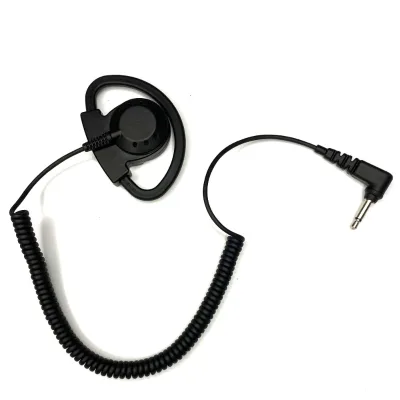
When evaluating walkie talkie earpieces, the primary technical focus must be on the jack type and cable construction. The market data indicates a prevalence of plug-in jack types with a specific diameter of 3.5mm. This dimension is a standard interface for many two-way radio models, yet buyers must verify this measurement against their specific radio units to ensure a secure physical connection. The cable diameter is another critical specification, with observed ranges including 3.0mm and 2.0mm options. Thicker cables often imply higher durability, while thinner profiles may offer greater flexibility for users requiring high mobility.
The wire material composition varies significantly across product listings, presenting distinct trade-offs between flexibility and resistance. Polyurethane (PU) is a frequently cited material, known for its abrasion resistance and ability to withstand repeated bending. Some listings also reference PVC (Polyvinyl Chloride) and TPE (Thermoplastic Elastomer) as wire materials. Additionally, a composite construction of Kevlar and PU appears in specific models, suggesting a focus on tensile strength and tear resistance. Buyers should request material data sheets to confirm the specific polymer blend, as this directly impacts the product's lifespan in industrial settings.
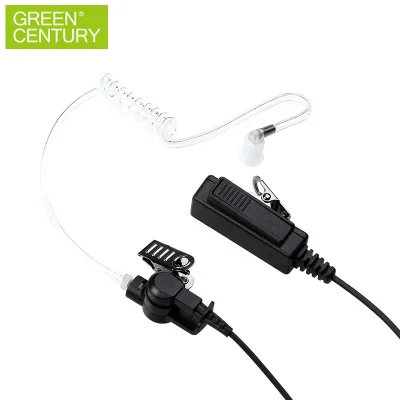
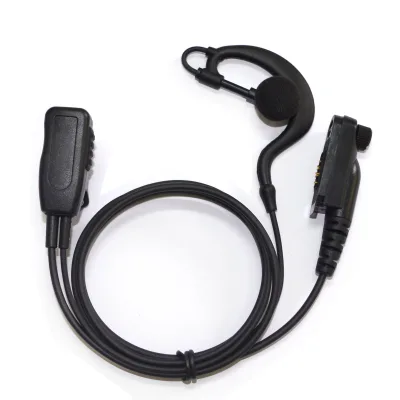
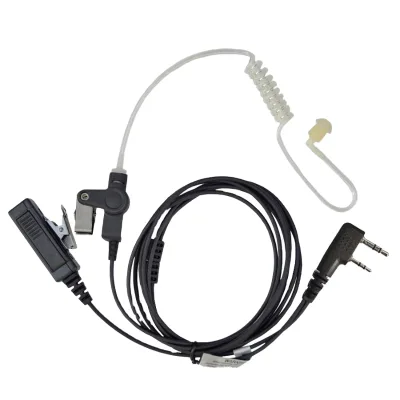
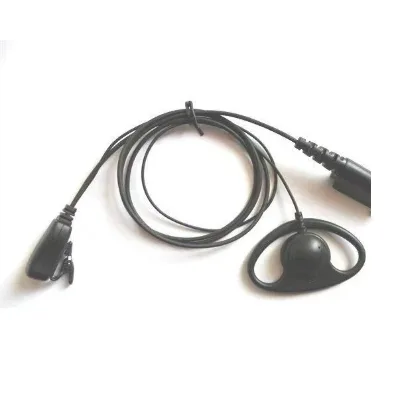
The earpiece style and acoustic design are equally vital for operational comfort. The observed product range includes acoustic tube earpieces and ear hook styles. The acoustic tube design is often preferred for its discreet nature and ability to direct sound precisely into the ear canal, while ear hook styles provide mechanical stability during vigorous movement. The product model identifiers, such as EM-3449-M15/SC/1W, EM-4438, and EM-3222, indicate that manufacturers offer distinct configurations. These models often correspond to specific impedance or sensitivity ratings, which must be matched to the radio's output power to prevent audio distortion or insufficient volume.
Compliance Standards and Certification Checks
Compliance is a non-negotiable aspect of B2B procurement for professional equipment. The provided data explicitly lists CE as a product standard for several items. This certification indicates conformity with health, safety, and environmental protection standards for products sold within the European Economic Area. Buyers should verify that the CE marking is accompanied by a valid Declaration of Conformity from the manufacturer, rather than relying solely on the label. While some background information mentions RoHS, this should be treated as a general industry trend rather than a guaranteed attribute of every listed item unless explicitly confirmed in the product documentation.
The product origin is another key compliance factor. Listings indicate origins in China and specifically Guangdong, a major manufacturing hub. Understanding the origin helps buyers anticipate regulatory requirements, such as import duties or specific labeling laws. Furthermore, the product standard "201510" appears in the data, though its context suggests it may refer to packaging dimensions rather than a technical safety standard. Buyers must distinguish between physical packaging specifications and actual product safety certifications. When sourcing for international markets, verifying that the manufacturer holds valid CE certification for the specific batch is essential to avoid customs delays or legal liabilities.
Cost Drivers and Pricing Dynamics
The pricing landscape for walkie talkie earpieces is highly variable, with observed ranges spanning from $0.90 to $88.00 USD. This wide disparity is driven by several factors, including material quality, feature complexity, and order volume. The lower end of the spectrum typically corresponds to basic PVC or simple PU cables with standard plug-in connectors. In contrast, the higher price points often reflect advanced features such as noise-cancelling capabilities, Kevlar-reinforced cabling, or specialized acoustic tube designs.
Minimum Order Quantity (MOQ) is a significant cost driver, with observed ranges from 1 to 100 units. Suppliers offering MOQs of 1 are typically catering to small businesses or replacement needs, often at a higher per-unit cost. Conversely, orders meeting the 100-unit threshold may unlock volume discounts, significantly reducing the average cost. Buyers should calculate the total cost of ownership, factoring in the potential need for replacement units over time. A cheaper unit that fails after six months may cost more in the long run than a slightly more expensive, durable unit with a longer warranty.
Typical Applications and User Demographics
The intended usage of these earpieces dictates the required durability and feature set. The data identifies specific user groups including security personnel, police officers, builders, and SWAT teams. These professionals operate in high-noise environments where clear communication is a safety imperative. Consequently, products with a "Noise-Cancelling" function and a "Microphone" feature are highly valued. The microphone type is often integrated into the line-control or the earpiece itself, allowing for hands-free operation.
The "Two-Way Radio/Walkie Talkie/Intercom" designation confirms the primary application domain. Some models are specifically designed for "Portable Media Players," suggesting versatility, but the core function remains radio communication. The "Dual Muff" receive method and a "Noise Reduction Ratio" of 24dB observed in specific listings highlight the need for acoustic isolation. This level of noise reduction is critical for users in construction zones or tactical operations where ambient noise can mask critical instructions. The weight of the unit, observed at 0.65kg for certain headsets, is a factor for users who wear the equipment for extended shifts.
Supplier Evaluation and Production Capabilities
Evaluating a supplier requires looking beyond the product listing to their production and customization capabilities. The data confirms that customization is available, with options for customer logos and specific packaging configurations. This flexibility is crucial for organizations that require branded equipment for identification purposes. The packaging standards vary from simple plastic bags to white boxes or paper boxes, with bulk packaging options like 50 pieces per poly bag. Buyers should assess whether the supplier can meet their specific packaging requirements, as this affects logistics and storage efficiency.
Warranty terms provide insight into the supplier's confidence in their product quality. Observed warranty periods range from 8 months to 12 months, with some listings specifying 10 months. A warranty of 12 months is generally considered a standard benchmark for durable goods. Buyers should clarify what the warranty covers, specifically regarding cable fraying or connector failure, which are common points of failure. The "Line-Control" feature and "Voice Activation (Vox)" status (noted as "No" in some listings) are also indicators of the product's sophistication. Suppliers offering Vox functionality may be better suited for hands-free tactical operations, while those without it may be more cost-effective for general use.
Quality Control and Long-Term Procurement Considerations
Implementing a robust quality control (QC) process is essential for maintaining operational readiness. Given the variation in wire materials (PU, PVC, TPE, Kevlar+PU), buyers should establish a sampling protocol to test for tensile strength and flexibility. The "Earpad Size" varies between "One Size" and "Medium," which can impact user comfort and seal quality. A poor seal can compromise noise reduction and audio clarity. Buyers should request samples to test fit and comfort on a diverse group of users before placing large orders.
Long-term procurement strategies should account for the "Product" type, such as "Swivel Earpiece" or "Clpe Earpiece," which may have specific compatibility requirements with different radio brands. The "for Radios: Clpe" specification suggests a specific compatibility standard that must be verified against the user's existing inventory. Additionally, the "Earpiece Style" and "Function" attributes must align with the operational environment. For instance, a "Style: Ear Hook" might be preferred for active duty, while an "Acoustic Tube Earpiece" might be better for undercover operations.
To ensure continuity of supply, buyers should verify the supplier's ability to maintain consistent product models. The presence of multiple model numbers (EM-3449, EM-4438, EM-3222, B-50Q) indicates a diverse portfolio, but buyers should secure a specific model for their fleet to simplify maintenance and spare parts management. Finally, the "Communication: Wired" specification confirms that these are not wireless solutions, which is a critical distinction for buyers considering battery life and interference issues. By rigorously applying these verification steps, organizations can secure reliable communication tools that meet the demanding needs of their workforce.
FAQs
What jack type and diameter do walkie talkie earpieces use?
Most models use a plug-in jack with a 3.5mm diameter. This standard size fits many two-way radio units, but buyers must verify compatibility with their specific radio models before purchasing to ensure a secure connection.
Which wire materials are available for these earpieces?
Available wire materials include PU, PVC, TPE, and a composite of Kevlar plus PU. These materials offer different trade-offs between flexibility and abrasion resistance, with Kevlar-reinforced options providing higher tensile strength for industrial environments.
Can buyers request custom logos and packaging for orders?
Yes, customization is available for customer logos and specific packaging configurations. Suppliers offer options ranging from simple plastic bags to white or paper boxes, with bulk packaging often available at 50 pieces per poly bag.
What warranty periods are typically offered for these products?
Warranty periods observed in the market range from 8 to 12 months. A 12-month warranty is a common benchmark for durable goods, though some listings specify 10 months, so buyers should confirm coverage details for cable and connector failures.
Which certifications are listed for walkie talkie earpiece products?
The CE standard is explicitly listed as a product standard for several items. This indicates conformity with European safety and environmental standards, and buyers should verify the Declaration of Conformity to ensure valid compliance for their target markets.
How does the noise reduction ratio affect user performance?
Specific models feature a noise reduction ratio of 24dB to ensure clear communication in high-noise environments. This level of acoustic isolation is critical for security personnel and construction crews who operate in loud industrial or tactical zones.
What are the typical minimum order quantities for suppliers?
Minimum order quantities observed range from 1 to 100 units depending on the supplier. Lower MOQs cater to small replacement needs, while orders meeting the 100-unit threshold may unlock volume discounts and significantly reduce the average per-unit cost.